
Build & Beyond
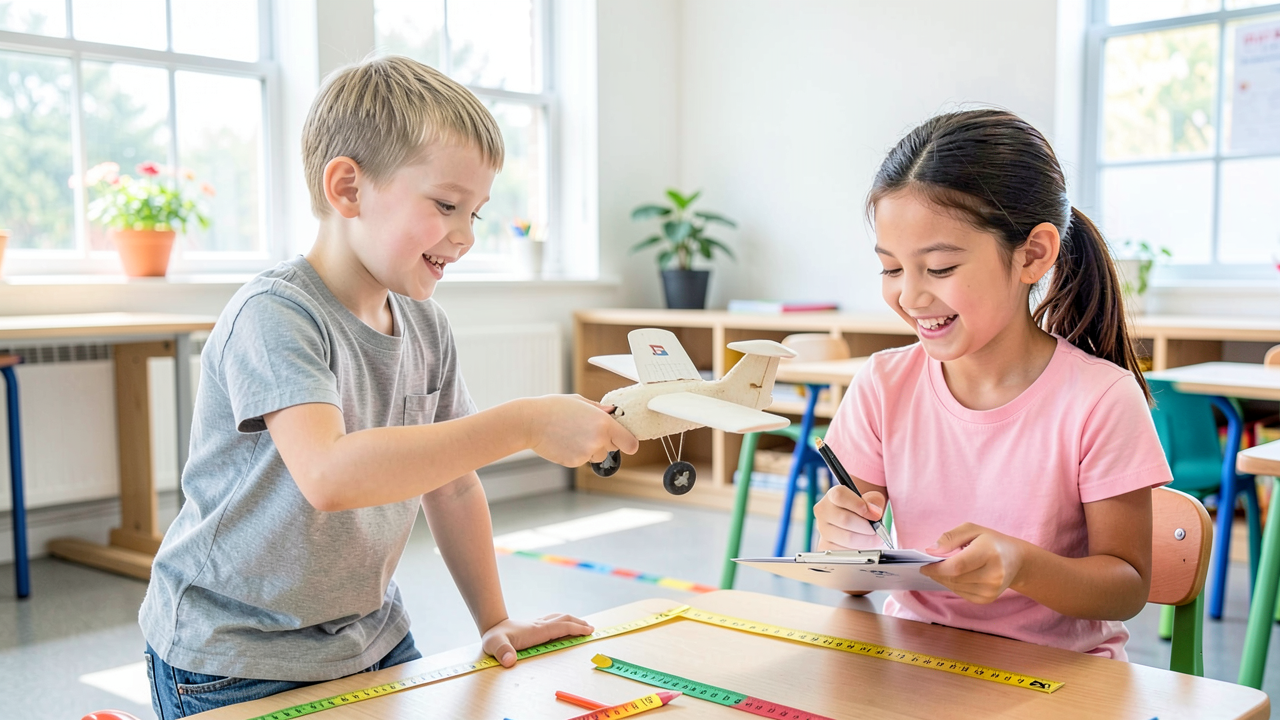
Build & Beyond hands second and third graders a real engineering workbench for twelve hours. The course opens with a materials laboratory where students test insulators against melting ice pops, then moves through nature-inspired mechanisms, simple-machine rescue rigs, and a flight lab where hand-built gliders deliver supplies on target. Every investigation is a fair test with numbers behind it: students time, measure, chart, and let the data drive each redesign.
The coding strand then levels up from sequences to real program structure. Students compress repetition into loops on life-size floor grids, translate physical games onto the screen, and finish by building branching choose-your-path stories driven by events, conditionals, and player input, with every branch tested and every bug hunted down. A data-literacy thread woven through both strands has students graphing trial results long before most programs introduce the idea.
Each lesson is self-contained and splits its hour evenly between learning the idea and applying it, so a class that meets once a week still finishes something every single session. Builds use ordinary classroom supplies — paper, cardboard, tape, string, cups, foil — alongside the durable equipment schools already own: thermometers, timers, rulers, spring scales, and tablets.
View the full lesson plan — all 12 lessons →
Course structure — 12 one-hour lessons
Every lesson splits its hour evenly: half spent learning the idea, half spent making something with it.