
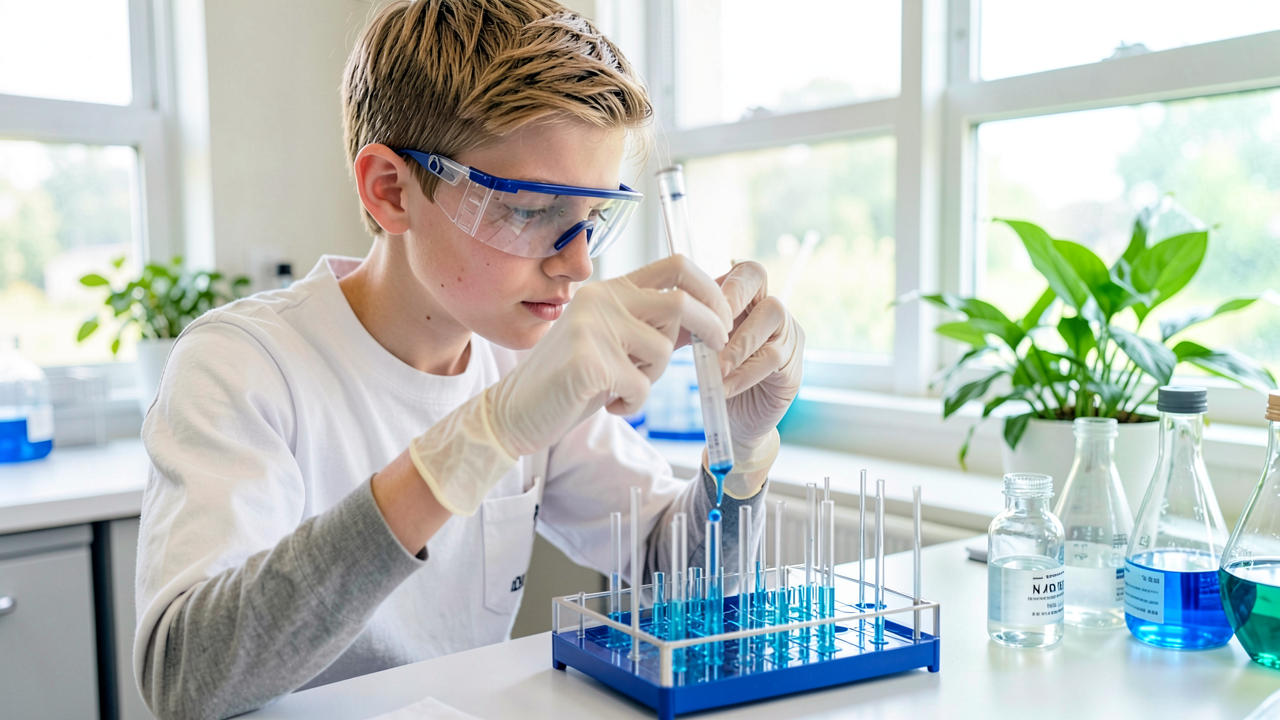
Engineering a Sustainable Planet
Engineering a Sustainable Planet tackles the three resource problems that will define this century - clean water, secure food, and renewable energy - with a lab bench, not a lecture. It is the most experiment-dense course in our engineering pathway: students test, culture, extract, ferment, distill, and measure their way through the year.
The water arc runs from field testing through treatment design to a working purification prototype of the students' own construction. The food arc takes students into genuine biotechnology - micropipetting, DNA extraction, gel electrophoresis, and bacterial transformation - building the hands-on foundation to evaluate genetically engineered crops on evidence rather than headlines. The energy arc ferments biomass into ethanol, synthesizes biodiesel, and burns both in calorimeters to answer the question that matters: does this fuel return more energy than it costs?
Digital probeware, statistical analysis, and lifecycle accounting run through every unit, and the course closes with students presenting defensible recommendations to stakeholders the way practicing environmental engineers must.
View the full lesson plan — all 180 periods →
Course structure — 6 units, 6 weeks each
In every unit, weeks 1–5 build the skills and week 6 applies them in a project, with a deliverable due at the end of each day.