
Flight Dynamics & Space Systems
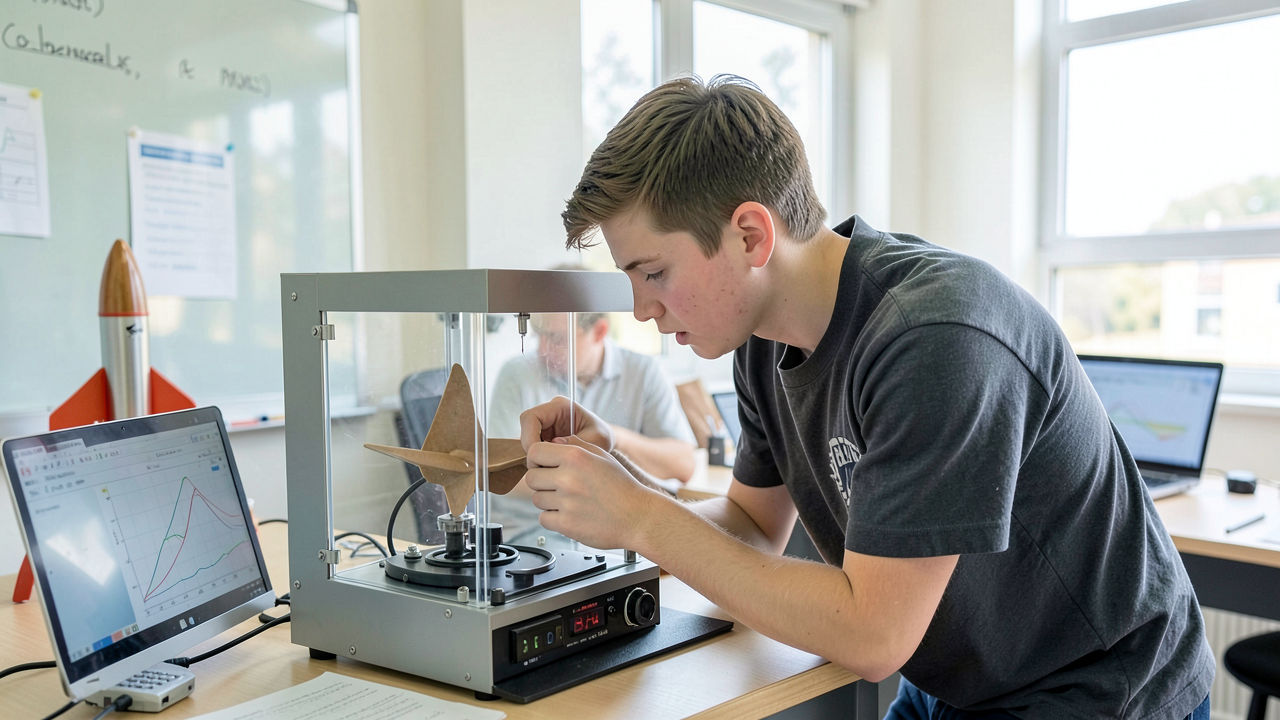
Flight Dynamics & Space Systems takes students from the first principles of lift to the mathematics of orbit. The course is built around instruments and vehicles students use and build themselves: airfoils of their own design tested in a wind tunnel, flight simulators for stability and control, rockets flown and recovered, and remotely operated vehicles wired for autonomy.
Theory and hardware advance together. Students learn why wings work - and argue both explanations honestly - then measure lift and drag for themselves and read the curves like professionals. Propulsion gets the same treatment across propellers, jets, and rockets, ending in motor thrust curves and a designed, simulated, launched, and analyzed model rocket.
The space half of the course applies Kepler's laws to real mission planning in industry-style orbital software, examines the brutal environment beyond the atmosphere, and surveys the materials that make flight vehicles possible. Python-based analysis of flight-test data runs through the whole year, closing the loop between prediction and measurement.
View the full lesson plan — all 180 periods →
Course structure — 6 units, 6 weeks each
In every unit, weeks 1–5 build the skills and week 6 applies them in a project, with a deliverable due at the end of each day.