
Healing by Design
Every unit of this course asks the same question: when the body fails, what can medicine actually do about it, and how do we know it works? Students follow one extended patient community through four medical crises: a dangerous bacterial infection, an inherited-disease screening decision, a cancer diagnosis, and end-stage organ failure. At each turn they master the interventions themselves, including molecular diagnostics, antibiotics, vaccines, hearing devices, genetic testing, imaging, chemotherapy, prosthetics, dialysis, and transplantation.
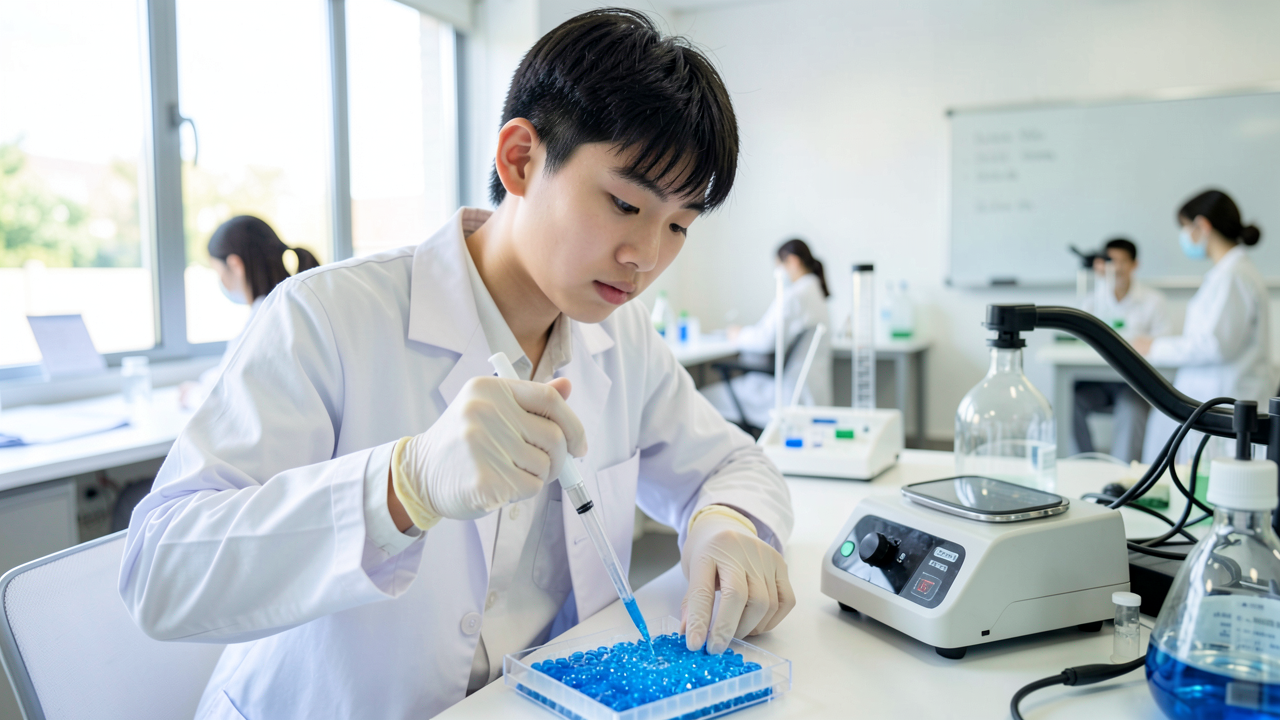
The laboratory work is genuinely advanced. Students run immunoassays and PCR, genotype DNA with restriction enzymes and gels, transform bacteria to produce a fluorescent protein and purify it by chromatography, and query the same sequence databases professional bioinformaticians use. Alongside the bench work they read audiograms and medical images, analyze epidemiological and clinical-trial data, and practice the statistics that separate a real treatment effect from noise.
Because every powerful intervention raises hard questions, ethics runs through the whole course: who gets a scarce organ, whether to screen an embryo, how to price a gene therapy, and what a person becomes when engineered parts replace failing ones. Students graduate ready for the capstone course and for university study in medicine, bioengineering, and public health.
View the full lesson plan — all 180 periods →
Course structure — 6 units, 6 weeks each
In every unit, weeks 1–5 build the skills and week 6 applies them in a project, with a deliverable due at the end of each day.