
Machines, Materials & Motion
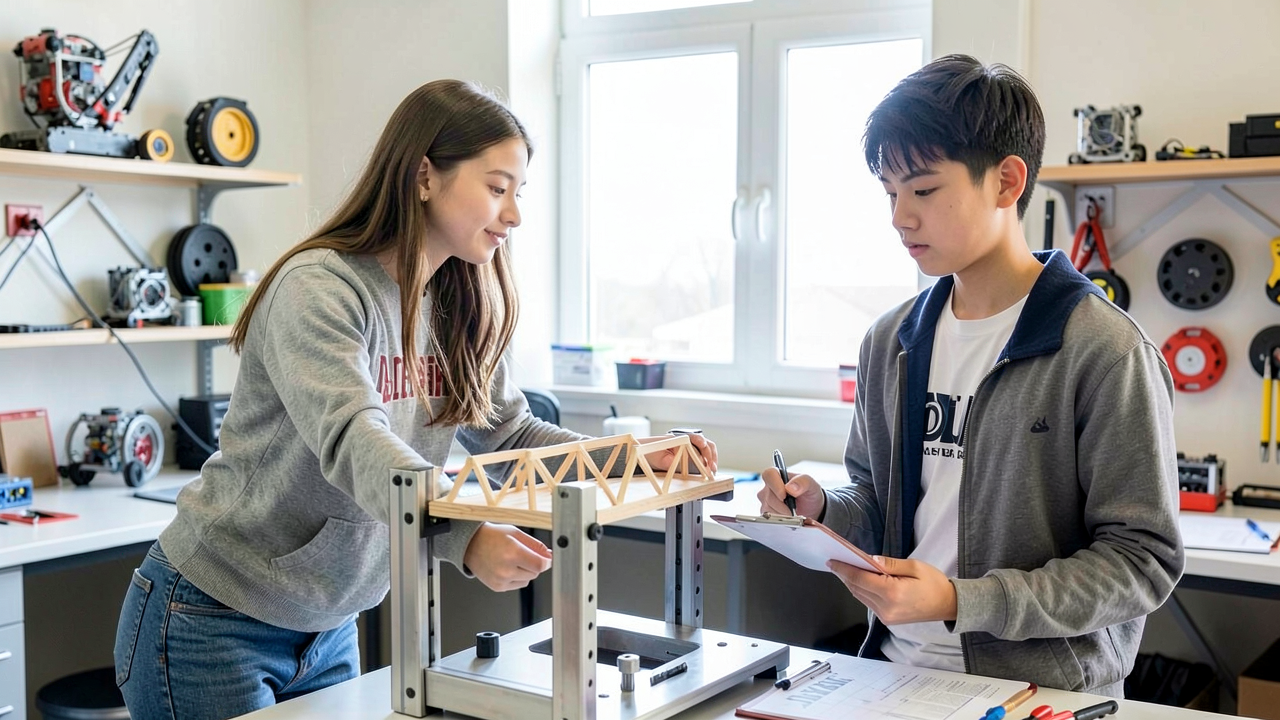
Machines, Materials & Motion is the course where engineering theory earns its keep. Every core idea - mechanical advantage, energy conversion, stress and strain, feedback control, projectile motion - arrives attached to a build that must perform to spec, from compound machines to truss bridges tested to destruction.
Students move fluently between the whiteboard and the workbench. They compute gear ratios and then assemble the gearbox; draw free-body diagrams and then load the structure; wire circuits on breadboards and verify every prediction with a multimeter. A modern robotics platform programmed in both block code and Python powers the control-systems work, including an automated sorting machine that marries sensors, logic, and pneumatics.
The year finishes with statistics and kinematics in service of accuracy: teams design, calibrate, and compete with a ballistic launcher whose performance they can predict before they fire it. Students leave with a formula fluency and lab discipline that sets up every specialized course that follows.
View the full lesson plan — all 180 periods →
Course structure — 6 units, 6 weeks each
In every unit, weeks 1–5 build the skills and week 6 applies them in a project, with a deliverable due at the end of each day.