
Medical Science Investigations
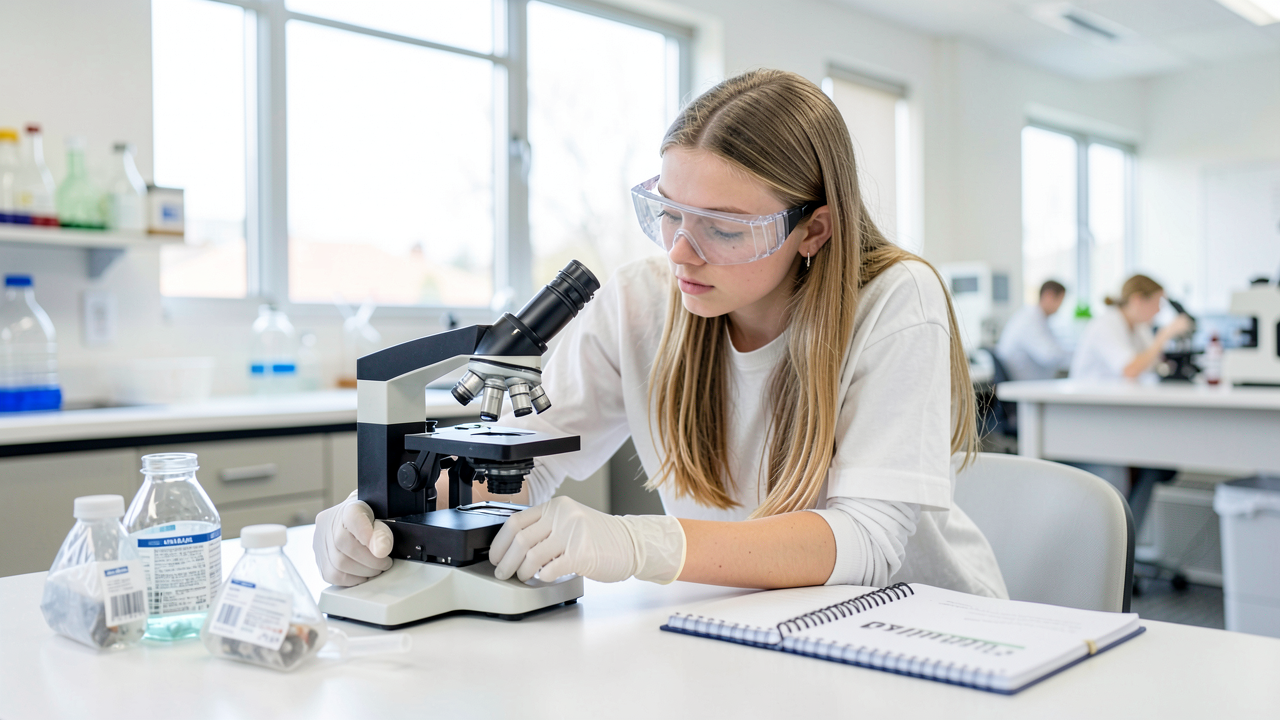
Students step into the shoes of working biomedical professionals from day one. The year opens with an unexplained death: learners process the scene, log physical evidence under a documented custody trail, examine hairs and fibers under the microscope, and run chemical tests on the molecules of life to piece together what happened. Along the way they build the habits of real scientists, including rigorous notebooks, controlled experiments, and honest interpretation of messy data.
The investigation then widens into living medicine. Students run a simulated primary-care clinic where they take patient histories, measure and interpret vital signs, read blood panels, and manage electronic records under strict privacy rules. They trace illness down to the level of DNA and proteins, counsel simulated families about inherited risk, and confront a hospital outbreak that demands microbiology, immunology, and emergency-response thinking all at once.
The course closes in an innovation studio where teams design and prototype their own biomedical solutions, from vessel-repair models to community health campaigns, and learn to analyze health data like modern epidemiologists. Students leave with a working map of the biomedical career landscape and a portfolio of authentic laboratory and design work.
View the full lesson plan — all 180 periods →
Course structure — 6 units, 6 weeks each
In every unit, weeks 1–5 build the skills and week 6 applies them in a project, with a deliverable due at the end of each day.