
Powering Tomorrow
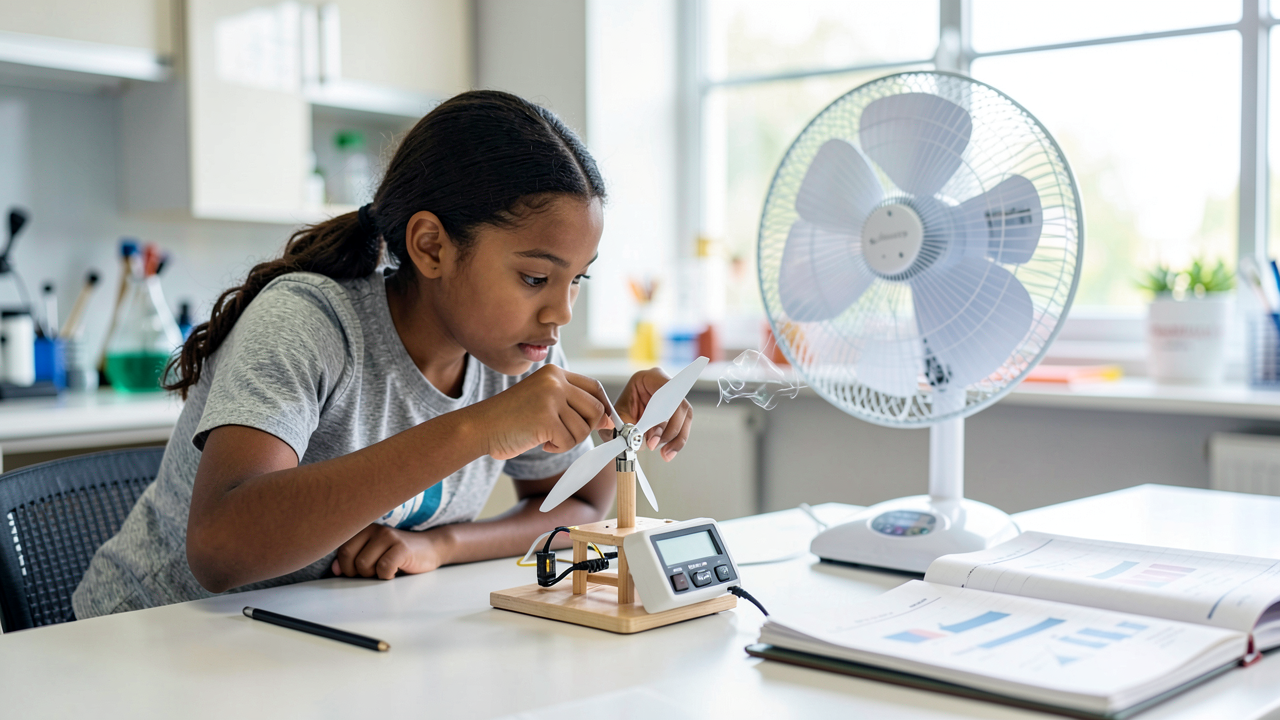
Where does the energy in a phone charger, a wind farm, or a slice of pizza actually come from, and where does it go? Powering Tomorrow turns students into energy auditors, experimenters, and advocates. Working with watt meters, multimeters, and temperature probes, they trace energy through its many forms, put real appliances on trial for their electricity bills, and build and tune their own wind-harvesting machines while logging every trial in a working lab notebook.
The second half of the course widens the lens from the outlet to the Earth. Students investigate how growing populations strain water, materials, and land; model how a city's waste stream could shrink; and study how heat sneaks through walls by conduction, convection, and radiation. They apply that thermal science to engineer an insulated shelter that must hold a temperature target under test, then close with a personal-impact campaign and an original clean-energy design defended with their own data.
Throughout, students practice honest measurement, fair-test experiment design, and public communication -- finishing with a portfolio of audits, prototypes, and presentations, plus a clear picture of careers in the fast-changing energy sector.
View the full lesson plan — all 60 periods →
Course structure — 3 units, 4 weeks each
In every unit, weeks 1–3 build the skills and week 4 applies them in a project, with a deliverable due at the end of each day.