
The Human Machine
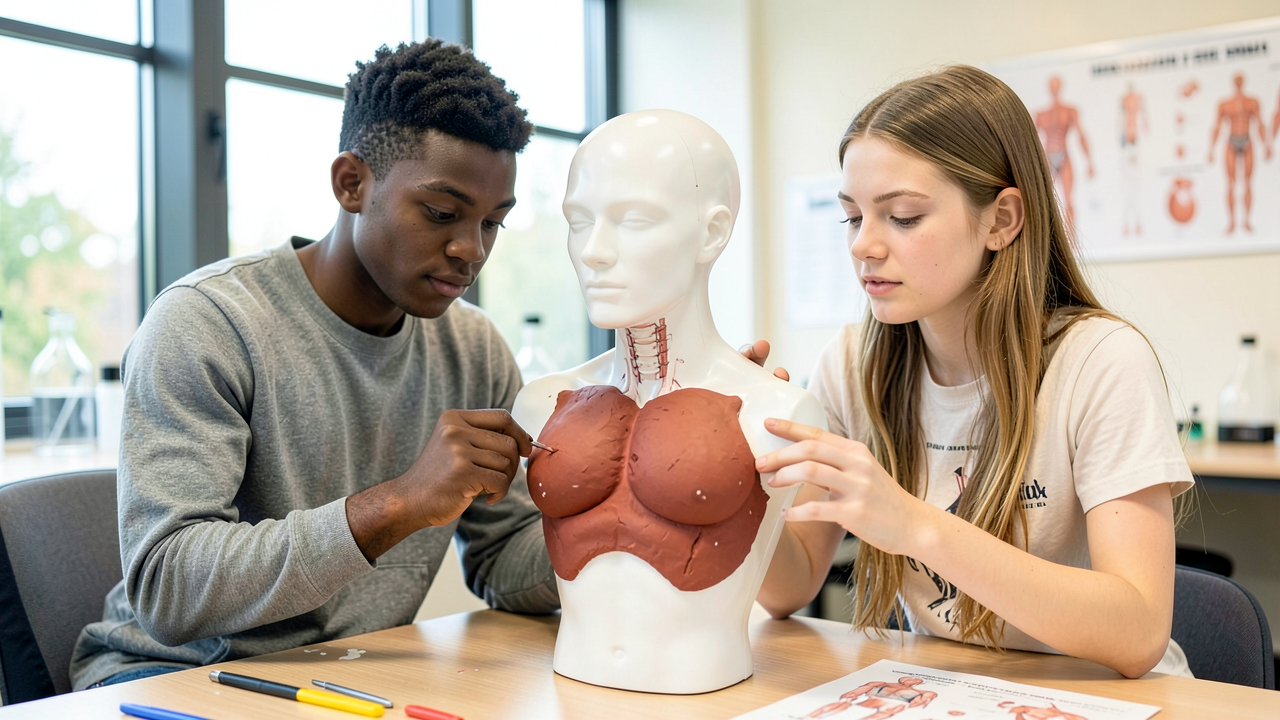
This is anatomy and physiology the way clinicians experience it: hands-on, case-driven, and measured on real instruments. Students sculpt muscles and organs in clay onto anatomical models, dissect real specimens including a mammalian brain, eye, kidney, and heart-lung block, and wire themselves to sensors that capture their own EKGs, muscle activity, and lung volumes. Every structure they build or measure is tied back to a patient who needs something explained, diagnosed, or repaired.
The year moves through the body as a set of engineering problems. A rehabilitation clinic frames the skeleton and muscles; a research internship frames the brain, senses, and hormones; expedition medicine frames the heart, lungs, and immune defenses; and a public exhibition project frames filtration and digestion. Students learn to read the scientific literature, choose the right lab test for a diagnostic question, and run an original team investigation from hypothesis to poster.
Throughout, students practice the quantitative side of modern medicine: analyzing their own physiological data, questioning whether clinical formulas treat all patients fairly, and communicating findings to real audiences. The course prepares learners for advanced biomedical study and for any career that demands a deep, working knowledge of the human body.
View the full lesson plan — all 180 periods →
Course structure — 6 units, 6 weeks each
In every unit, weeks 1–5 build the skills and week 6 applies them in a project, with a deliverable due at the end of each day.